
Keep a short state note with agreed facts, one unresolved choice and the question you want answered next. DarLink’s policies discuss ongoing conversation history, but a note stored on your side gives you a particular version to reread and control before starting another thread.
Reduce the story to what the next reply needs
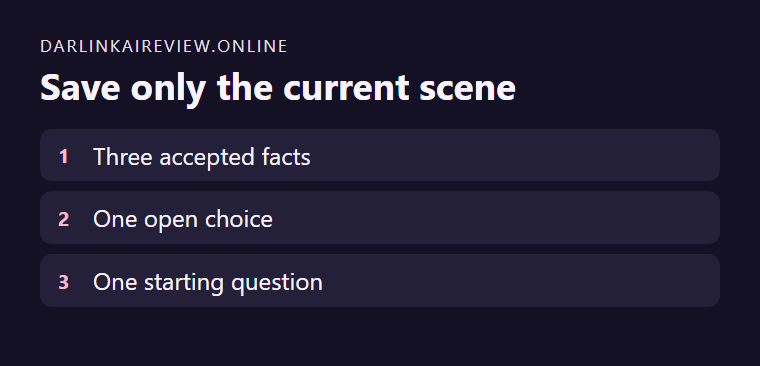
In an original fictional workshop scene, the adult characters repaired a shutter, left the spare latch on a shelf and agreed to wait for the rain to stop. The next question is whether to close the workshop or inspect the roof. Record those three accepted facts and the open decision.
Omit drafts you rejected. If a previous reply suggested opening the workshop immediately and your characters chose to wait, that discarded idea should stay out of the accepted facts. A little history matters when it explains the choice. A whole transcript leaves the model to decide which lines count as settled.
Hand over the current state in plain sentences
Paste or paraphrase the fictional note if you choose to start a fresh conversation. Ask one narrow question such as “Which task would you do while the rain continues?” Check whether the answer respects the spare latch’s location before adding new details.
Keep the local note short enough to read while writing the next opening. Update it only when the scene changes. DarLink’s terms and privacy policy describe platform processing of submitted content. Use fictional information and keep private account details out of the scene record. Your notes remain useful for planning without depending on a particular history or export feature.